

React Native Development Services: Build iOS & Android Apps from One Codebase
Expert React Native developers who deliver cross-platform mobile apps faster, cheaper, and with a single shared codebase — without sacrificing quality.
פורסם ב: October 8, 2026
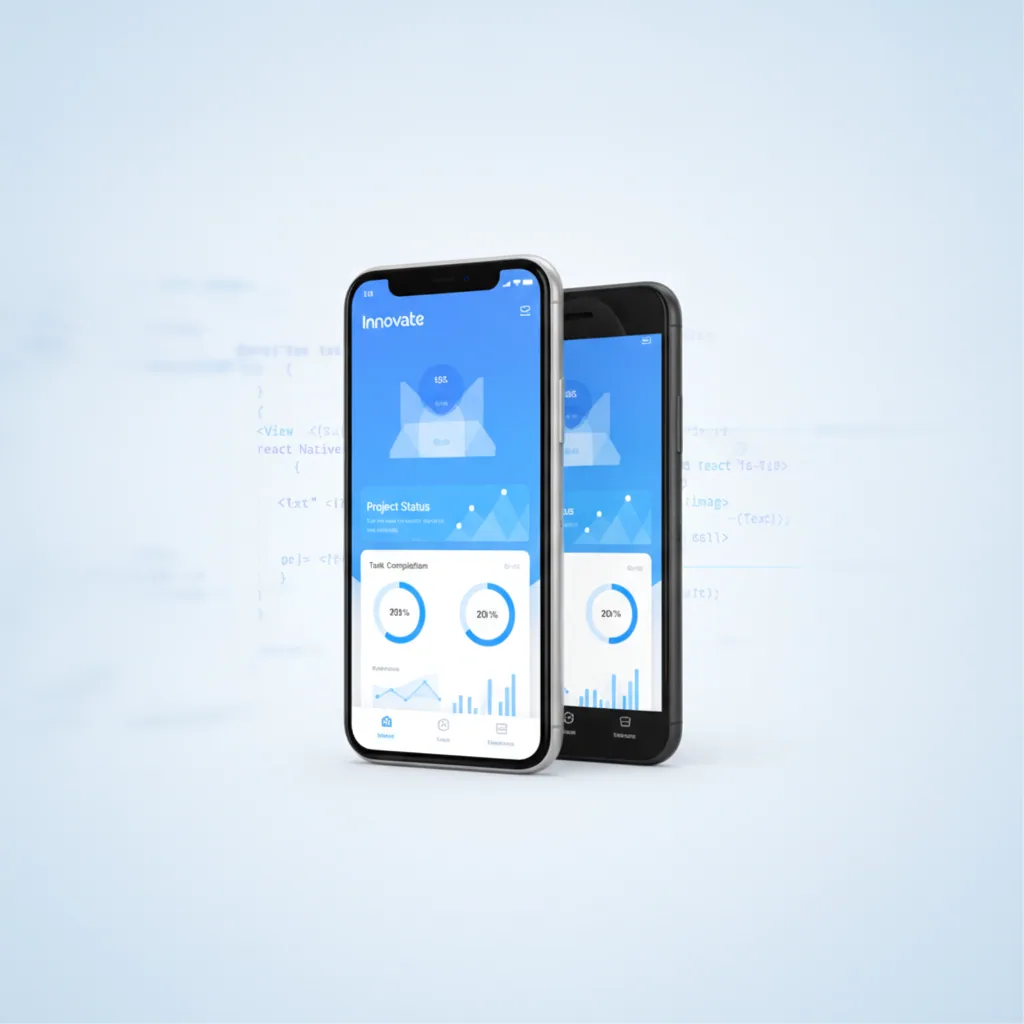
What Are React Native Development Services?
React Native development services provide companies with expert engineers who build mobile applications using Meta's open-source React Native framework. The result: a single codebase that runs natively on both iOS and Android — typically at 60–70% of the cost of building two separate native apps.
For SaaS companies, startups, and established businesses expanding to mobile, React Native has become the dominant choice for cross-platform development. As of 2026, apps like Facebook, Shopify, Discord, and Microsoft Teams use React Native in production at scale.
But not all React Native development teams are the same. The framework requires deep expertise in JavaScript, native module bridging, performance optimization, and platform-specific behavior. Choosing the wrong team means buggy animations, slow apps, and costly rewrites.
Why React Native for Cross-Platform Mobile Development?
Businesses choose React Native over alternatives (Flutter, Ionic, native iOS/Android) for three core reasons:
- Single codebase, two platforms — Write once, ship to both App Store and Google Play. Maintenance happens in one place, not two.
- Faster time to market — React Native development is 30–40% faster than building separate native apps. Startups reach market before the competition.
- Leverage existing web teams — Companies with React web engineers can extend the same team to mobile, reducing hiring costs and knowledge silos.
React Native is not the right choice for every use case. Apps with heavy hardware integrations, complex real-time graphics, or extreme performance requirements (game engines, AR/VR) are better served by fully native development. A good React Native development partner will tell you this upfront — not push the framework regardless of fit.
React Native Mobile App Development Services: What's Included
When companies search for a React Native mobile app development services provider, they're usually comparing more than just hourly rates. A professional React Native mobile app development services engagement covers the full product lifecycle — not just writing screens:
Architecture & Technical Planning
Before writing a line of code, your development partner should design the app architecture: state management strategy (Redux, Zustand, or React Query), navigation library (React Navigation vs Expo Router), native module dependencies, CI/CD pipeline, and app store deployment setup. Poor architecture decisions at this stage become expensive refactors six months later.
Cross-Platform UI Development
The UI layer is where React Native's shared codebase shines. Components are written once and rendered natively on both platforms. A senior team handles platform-specific nuances — safe area insets on iOS, Android back-button behavior, keyboard avoidance — so users get a native feel on their device, not a generic wrapper.
Native Module Integration
React Native's bridge to native code allows deep platform integration: camera, biometrics, Bluetooth, push notifications, in-app purchases, and background processing. Many React Native teams lack the iOS/Android native expertise to build reliable bridges. UIDB's team includes engineers with native iOS and Android experience alongside React Native specialists.
API Integration & Backend Connection
Mobile apps rarely stand alone. Your app connects to REST APIs, GraphQL endpoints, third-party services (payment gateways, analytics, authentication), and real-time data sources (WebSockets, push notifications). We design the data layer for offline support and optimistic updates — so the app feels responsive even on poor connections.
Testing, QA & Performance Optimization
React Native apps require testing across iOS and Android, multiple OS versions, and dozens of device sizes. We implement automated unit tests, integration tests, and visual regression testing. Performance profiling catches frame-rate drops and memory leaks before they reach production users.
React Native vs. Flutter: Which Is Right for Your Project?
The two dominant cross-platform frameworks in 2026 both have strong production track records. The choice depends on your specific situation:
- React Native — Better if your team already knows JavaScript/TypeScript, you have an existing React web codebase to share logic with, or you need the largest ecosystem of third-party packages.
- Flutter — Better if you're starting from scratch with no existing web team, need pixel-perfect custom UI that matches across platforms exactly, or are building highly visual applications.
At UIDB, we build with both frameworks. Our recommendation is always driven by your team's existing knowledge, your timeline, and the specific UX requirements — not what we prefer to code in.
The UIDB React Native Development Process
Our 4-phase approach to React Native projects ensures the app you launch is the one you planned — with no surprises on cost or timeline:
- Discovery & Architecture — We map your user flows, design the data model, choose the tech stack, and plan native dependencies before any development starts.
- Iterative Development — Agile sprints with working builds delivered every 2 weeks. You test on real devices continuously throughout development.
- QA & Performance — Automated testing, device lab QA, and React Native performance profiler runs to hit 60fps on all target devices.
- App Store Launch & Ongoing Maintenance — We handle App Store and Google Play submission, then remain your long-term R&D partner for updates, new features, and React Native version upgrades.
When React Native Development Makes Business Sense
React Native is the right choice when:
- You need both iOS and Android but don't have the budget for two separate native apps
- Your app's core functionality is UI-driven (forms, lists, dashboards, e-commerce) rather than hardware-intensive
- Time to market is a competitive advantage — you need to ship fast and iterate
- You want one team to own both platforms, reducing coordination overhead
It's the wrong choice when your app requires sustained 120fps rendering, complex background audio/video processing, or cutting-edge hardware APIs that React Native doesn't yet expose.
React Native Projects We've Built at UIDB
Our React Native experience spans multiple industries. We've built cross-platform apps for e-commerce companies managing product catalogs with real-time inventory sync, project management platforms requiring offline-first data access, and field service applications integrating with Bluetooth hardware devices. See how we approach complex mobile product development in our success stories.
Estimating React Native Development Costs
React Native project costs depend on scope, not the framework. A simple MVP (5–8 screens, basic API integration, standard authentication) typically runs 8–14 weeks with a senior development team. A production-grade SaaS mobile client with offline support, real-time data, and complex native integrations takes 4–8 months. We provide detailed scoping and transparent pricing before any commitment — no hourly billing surprises.
Our clients consistently report that React Native projects come in at 50–65% the cost of equivalent native development, while reaching 90–95% of the native user experience quality for business applications.
Choosing the Right React Native Development Partner
Before hiring a React Native team, ask these five questions:
- Do your engineers have native iOS and Android experience, or only JavaScript?
- How do you handle React Native version upgrades when Meta releases breaking changes?
- Can I see a real-world app you've shipped to the App Store?
- How do you test across the iOS and Android device fragmentation?
- What's your post-launch support model?
A good partner answers all five confidently. If you get vague answers about native experience or a silence on post-launch support, keep looking.
Frequently Asked Questions
What are React Native mobile app development services?
React Native mobile app development services cover the full process of designing, building, testing, and launching a cross-platform mobile app with a single JavaScript/TypeScript codebase — from architecture and UI to native module integration, App Store submission, and ongoing maintenance.
How much do React Native mobile app development services cost?
Most engagements range from 8–14 weeks for an MVP to 4–8 months for a production-grade app with offline support and native integrations, typically at 50–65% the cost of building separate native iOS and Android apps.
Is React Native still a good choice in 2026?
Yes. React Native remains the most widely adopted cross-platform framework, used in production by companies like Shopify, Discord, and Microsoft Teams, with a mature ecosystem and strong hiring pool.
UIDB is a boutique R&D partner, not a development factory. We take on React Native projects where we believe in the product and commit as a long-term technology partner — not a one-time vendor. See all our services or contact us for a free consultation to discuss your mobile app project.
 תגיות:
- react native
- mobile app development
- cross-platform development
- ios development
- android development
- software development


השאירו תגובה