

Mobile App PRD Template: A Free, Practical Framework
A ready-to-use mobile app PRD template covering every section product and engineering teams actually need — with examples for iOS and Android products.
פורסם ב: September 18, 2026
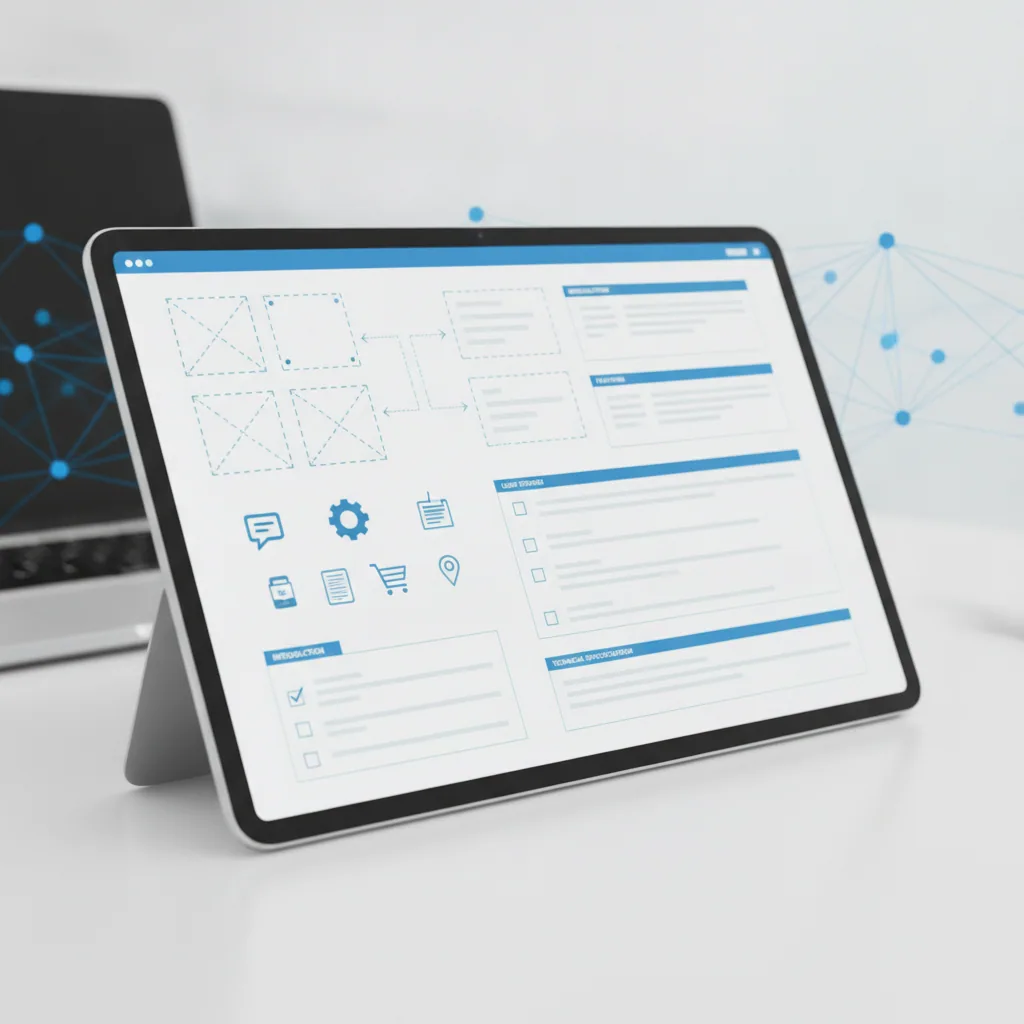
Why You Need a Mobile App PRD Template
A Product Requirements Document (PRD) is the single source of truth that aligns product, design, and engineering before a line of mobile code gets written. Without one, teams discover misaligned assumptions mid-sprint — the kind of rework that turns a 10-week mobile build into a 16-week one. A good mobile app PRD template solves this by giving every stakeholder the same structure to fill in, so nothing critical gets skipped.
Mobile apps have requirements that a generic PRD template doesn't cover well: platform-specific behavior (iOS vs Android), offline states, push notification logic, app store review constraints, and device fragmentation. This mobile app PRD template is built specifically around those gaps.
The Core Sections Every Mobile App PRD Template Should Include
1. Overview & Problem Statement
One paragraph: what problem does this app or feature solve, for whom, and why now. This section keeps the rest of the document anchored — every requirement should trace back to it.
2. Target Users & Personas
Who uses this app, on which devices, in what context (on-the-go, at a desk, in the field). Mobile-specific detail matters here: a field-service app used outdoors with gloves on has different UX requirements than a dashboard app used at a desk.
3. User Stories & Acceptance Criteria
Write each requirement as "As a [user], I want to [action], so that [outcome]" with explicit, testable acceptance criteria. Acceptance criteria are what turns a PRD from a wish list into something engineering can actually estimate and build against.
4. Platform & Technical Requirements
Specify minimum OS versions (iOS/Android), offline behavior, push notification triggers, biometric or camera access needs, and any third-party SDKs (payments, analytics, maps). If the app will be built cross-platform, note it here — see our React Native development services page for what a cross-platform technical scope typically covers.
5. Design & UX Requirements
Link to wireframes or Figma files, note platform design guidelines to follow (Human Interface Guidelines for iOS, Material Design for Android), and flag any accessibility requirements.
6. Success Metrics & KPIs
Define what "working" looks like in numbers: activation rate, retention at day 7/30, crash-free session rate, or a specific business metric. Metrics defined after launch are usually the wrong ones — pressure-test them before development starts.
7. Out of Scope
Explicitly list what this version will NOT do. This single section prevents more scope creep than any other part of the document.
8. Timeline & Milestones
High-level phases (discovery, build, QA, app store submission, launch) with target dates. Keep it directional at the PRD stage — detailed sprint planning happens after technical scoping.
Copy-Paste Mobile App PRD Template
Use this outline as a starting structure and adapt the depth to your project size:
- 1. Overview — Problem statement, goals, success definition
- 2. Users — Primary persona(s), device/context of use
- 3. User Stories — Numbered list, each with acceptance criteria
- 4. Technical Requirements — OS versions, offline behavior, integrations, SDKs
- 5. Design Requirements — Wireframe links, platform guidelines, accessibility
- 6. Success Metrics — KPIs with target numbers and measurement window
- 7. Out of Scope — Explicit exclusions for this release
- 8. Timeline — Phases and target dates
- 9. Open Questions — Anything unresolved that blocks a firm estimate
Common Mistakes When Filling Out a Mobile App PRD Template
- Skipping the "Out of Scope" section — without it, every stakeholder assumes their favorite feature is included
- Writing requirements without acceptance criteria — "the app should be fast" is not testable; "screens load in under 1 second on a mid-tier Android device" is
- Ignoring platform differences — treating iOS and Android as identical leads to requirements that only make sense for one platform
- No success metrics until after launch — forces teams to reverse-engineer what "success" means, usually after stakeholders already disagree
Template vs. Full PRD Guide: Which Do You Need?
This template is a fast-start framework for teams who already understand PRD structure and want a working document today. If you're building your first PRD or want the reasoning behind each section explained in depth, read our complete guide to building a PRD for app development.
From PRD to Working App
A strong PRD is only the starting point. Turning it into a shipped mobile app requires the same rigor in architecture, cross-platform decisions, and QA. See how we approach this end-to-end in our services overview and success stories.
Need help turning your PRD into a scoped, estimated mobile project? Contact us for a free consultation.
 תגיות:
- mobile app prd template
- product requirements document
- app development
- mobile app development
- prd template


השאירו תגובה